
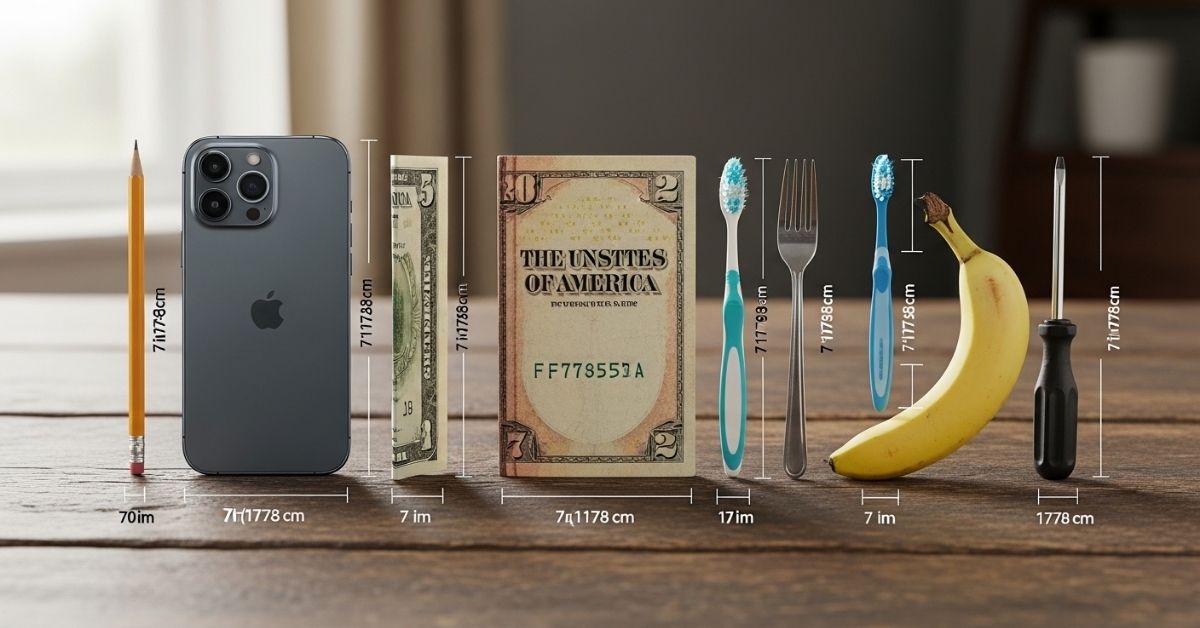
15 Common Things that are 7 Inches Long
You’re standing in a store, holding a shelf bracket, and the packaging says it needs 7 inches of clearance. No tape measure in sight. Sound familiar? Most of us have been there. We reach for our phone, Google it, and still can’t quite picture it. That’s the frustrating part. Numbers alone don’t help your brain visualize real space.
Here’s the good news. You’re probably carrying at least two or three things right now that measure close to 7 inches. Once you know what to look for, estimating length without a ruler becomes surprisingly easy. This guide walks you through 15 common things that are 7 inches long, plus practical tips to use them as quick measurement references in daily life.
Everyday Household Objects Around 7 Inches
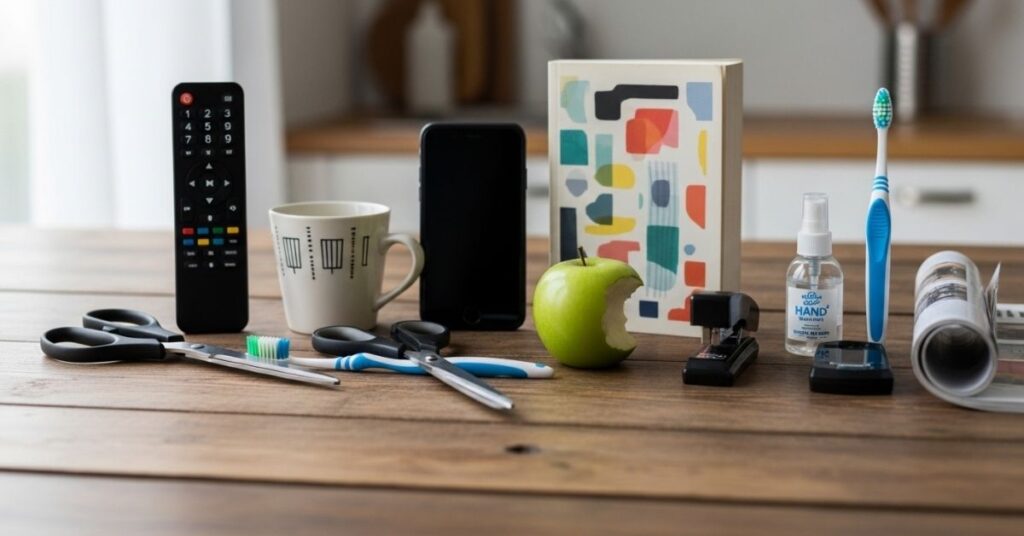
Let’s start at home, because that’s where most measuring moments happen. You’d be surprised how many objects sitting on your desk or countertop are right around 7 inches long.
A standard pencil is one of the most reliable references. Fresh out of the box, most pencils measure exactly 7 inches. It’s not a coincidence either. That length fits comfortably in an adult hand and leaves enough room for a decent eraser. Next time you need a quick size comparison, grab a pencil.
A toothbrush is another solid example. The travel-sized ones especially tend to land right around that 7-inch mark. They’re designed compact on purpose, and that compact design just happens to match this measurement almost perfectly.
What about your TV remote? Most universal remotes average around 7 inches in length. It’s one of those objects you hold daily without ever thinking about its size. Now you have a reason to notice.
The butter knife on your kitchen table is roughly 7 inches too. Standard table knives used for spreading are designed to fit a dinner plate setting, and that sizing lands them consistently near this length.
Here’s a quick reference table for household items:
| Object | Approximate Length | Notes |
| Standard pencil | 7 inches | Fresh, unsharpened |
| Travel toothbrush | ~7 inches | Compact design |
| TV remote control | ~7 inches | Universal remotes |
| Butter knife | ~7 inches | Standard table knife |
| Small silicone spatula | ~7 inches | Mini baking spatula |
| Pocket paperback book | ~7 inches | Height measurement |
A small silicone spatula, the kind you use to scrape the last bit of peanut butter from the jar, also fits this size. And a pocket-sized paperback novel? Measure the height, not the width, and you’ll often hit right around 7 inches. These are the kinds of everyday objects measurement experts and chefs use without thinking twice.
Read More: 14 Common Things That Are 3 Inches Long
Compact Tech Gadgets and Everyday Devices
Technology gives us some surprisingly useful size references. If you own a smartphone, you already carry one of the best visual measurement references around.
Many popular smartphones, including several iPhone and Android models, measure between 6 and 7 inches diagonally from corner to corner. That edge-to-edge length makes your phone a handy tool for estimating. How big is 7 inches compared to a phone? Pretty much exactly that. Hold your phone up next to an unknown object and you’ll get a rough but reliable read instantly.
Larger USB flash drives with their caps attached can also push close to 7 inches in total length. It depends on the brand and model, but chunky drives with full caps are worth checking. They make for a compact item dimension reference in tech drawers and office bags alike.
Travel-sized toiletry tubes, the ones you grab for carry-on luggage, tend to fall right in this range too. Airlines limit liquid containers to 3.4 ounces, and those containers often stretch to around 7 inches in length. Convenient for travel and for measuring.
Kitchen Helpers that are 7 Inches Long
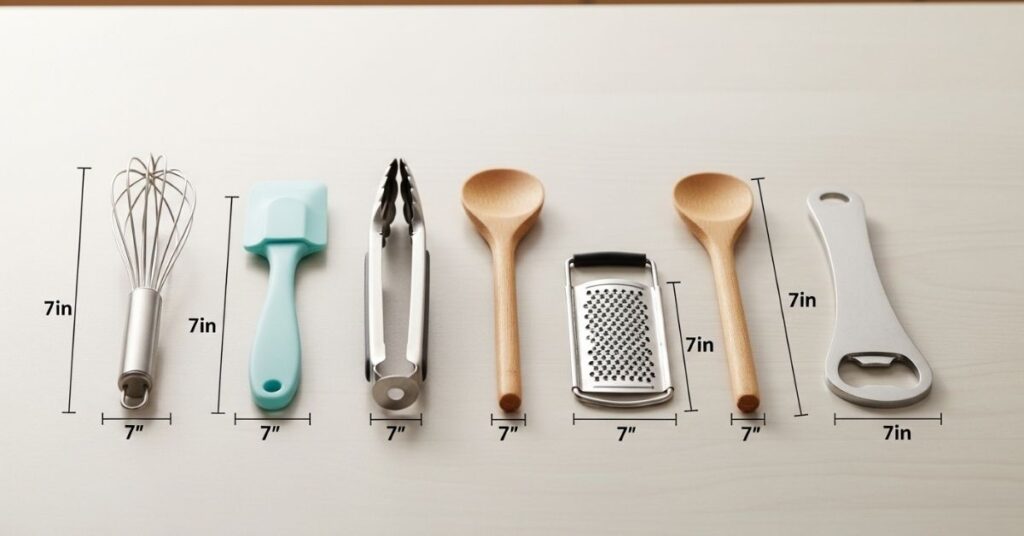
The kitchen is full of quick measuring techniques hiding in plain sight. You don’t need a ruler when you know your tools.
A large carrot from the grocery store is a classic example. Medium to large carrots typically measure between 6.5 and 7.5 inches. Not exact, but close enough to use as a visual guide when you need a rough size comparison object in a pinch.
Crafting scissors, the small pair you keep in the junk drawer or sewing kit, measure around 7 inches from tip to handle end. They’re built for precision in tight spaces, and that design keeps them in this compact size range consistently.
The spaghetti spoon, that slotted spoon with prongs you use to serve pasta, usually has a handle length of about 7 inches. The overall spoon is longer, but the handle alone gives you a reliable benchmark.
A hairbrush handle, especially on travel or compact brushes, also falls in this zone. It’s one of those pocket-size item lengths you carry without realizing it could double as a measurement hack.
Office and Travel Essentials
Step into your bag or desk drawer and you’ll find more examples than you’d expect. Office item dimensions are often standardized for a reason, and 7 inches shows up more than once.
A standard ballpoint pen measures close to 5.5 to 6 inches, but longer pens and fountain pens regularly hit the 7-inch mark. It’s worth checking the pens you actually use because many are closer to this length than you’d think.
Playing cards stacked side by side or arranged in a row can approximate 7 inches depending on how many you use. It’s a fun trick for quick estimation, especially if you’re a card game fan.
A pack of chewing gum, laid flat, measures roughly 3 to 3.5 inches per pack. Stack two packs together and you’re right at 7 inches. Odd? Yes. Useful? Absolutely.
| Office or Travel Item | Approximate Length | Practical Use |
| Long fountain pen | ~7 inches | Desk or bag reference |
| Two gum packs stacked | ~7 inches | Quick estimation trick |
| Travel toothpaste tube | ~7 inches | Carry-on bag reference |
| Compact hairbrush | ~7 inches | Travel bag reference |
| Playing cards (arranged) | ~7 inches | Fun estimation method |
Practical Applications of 7 Inches
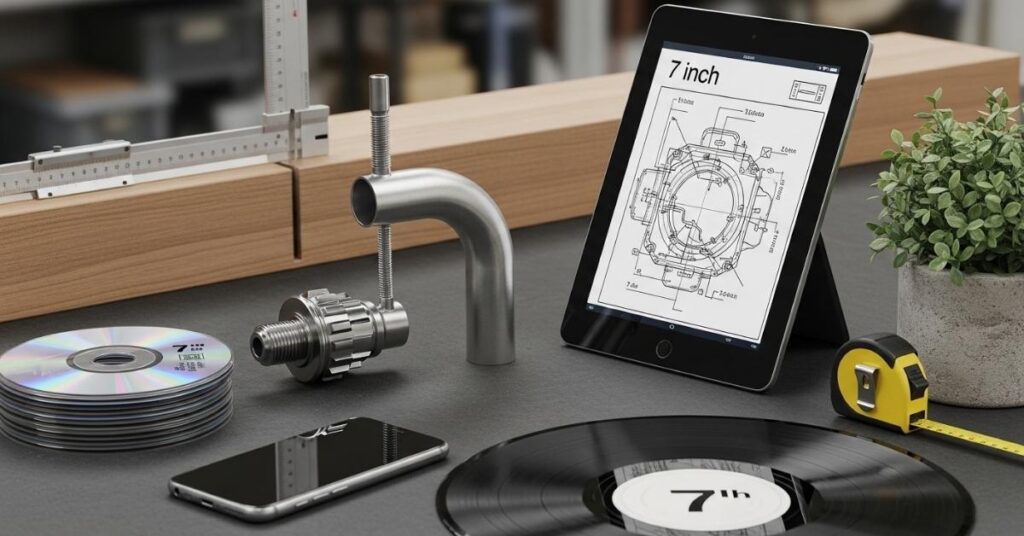
Knowing how long is 7 inches in real life goes way beyond trivia. It’s genuinely useful in everyday situations.
When you’re doing a DIY project and need to measure a gap, a clearance, or a shelf space, having a mental list of objects around 7 inches saves you a trip to find the tape measure. Grab a pencil. Done.
In cooking, estimating ingredient lengths matters more than people admit. Recipes that call for specific cuts or portion sizes are easier to handle when you can eyeball a carrot or a piece of fish without stopping to measure formally.
Packing for a trip becomes less stressful too. Knowing your travel toothbrush, toothpaste tube, and hairbrush all sit at roughly 7 inches helps you visualize what fits where in your bag. No more guessing whether something clears the zipper pocket.
Here are some quick practical uses:
- Measuring shelf gaps or drawer clearances without a ruler
- Estimating produce lengths while grocery shopping
- Checking if items fit in a carry-on bag pocket
- Teaching kids to estimate length using familiar objects
- Comparing product dimensions before buying online
Object length estimation is a skill. And like any skill, the more references you have locked in your memory, the faster and more accurate you get.
Common Misconceptions About Size Estimation
People get this wrong more often than they realize. Size estimation without tools is harder than it looks, and 7 inches is one of those lengths that trips people up regularly.
One common mistake is assuming a playing card is close to 7 inches. It isn’t. A standard playing card measures 3.5 by 2.5 inches. Don’t let the visual fool you.
Another one is thinking a dollar bill is around 7 inches. Actually, a US dollar bill is 6.14 inches long. Close, but not quite. If you’re using it as a reference, factor in that small gap.
Many people also confuse inch to centimeter conversion on the fly. For the record, 7 inches equals exactly 17.78 centimeters. If you work in metric, that’s closer to 178 millimeters. Keeping that number in mind helps when you’re shopping from international retailers or reading product specs from overseas brands.
Some folks also assume their smartphone is longer than it is. Many popular models sit between 5.8 and 6.7 inches. Only the larger pro or plus models actually approach 7 inches. Check your specific model before using it as a reference.
How to Make the Most of Knowing What’s 7 Inches
Now that you have a solid list, here’s how to actually put it to use. The goal is to make measurement in everyday life feel automatic, not effortful.
Start by picking two or three objects from this list that you carry or use daily. A pen, your phone, and a toothbrush are a great starting trio. Mentally log their lengths. After a few days, you’ll start eyeballing 7 inches with surprising accuracy.
Use the buddy system for estimation. Place two objects next to each other to cross-check. If your pen and a butter knife both suggest the same length, you’re probably right.
Teach this to your kids. Children who learn visual estimation early develop stronger spatial reasoning. It’s a genuinely useful life skill that schools don’t always cover. Using household measurement hacks makes the lesson stick.
If you shop online often, keep this mental toolkit handy. Product listings show dimensions in numbers, but those numbers only mean something when you can picture them. Matching listed dimensions to familiar objects turns abstract specs into real-world understanding.
FAQ’s
What objects are 7 inches long in everyday life?
Common examples include a standard pencil, a travel toothbrush, a butter knife, and a universal TV remote. Most of these are items you already own and use daily.
How long is 7 inches compared to a phone?
Most large smartphones measure between 6 and 7 inches diagonally. Larger pro models from Apple or Samsung often come closest to 7 inches edge to edge.
Is a toothbrush 7 inches long?
Travel-sized toothbrushes typically measure close to 7 inches. Full-sized adult toothbrushes can run slightly longer, usually between 7 and 8 inches depending on the brand.
How many centimeters is 7 inches?
Seven inches equals exactly 17.78 centimeters, or approximately 178 millimeters. It also works out to just under 0.58 of a foot.
How can I measure 7 inches without a ruler?
Use a standard pencil, a butter knife, or a travel toothbrush as a reference. These objects consistently measure close to 7 inches and are usually within arm’s reach.
Conclusion
Seven inches doesn’t sound like much. But once you start noticing it, you’ll see it everywhere. In your kitchen, your bag, your desk drawer, and your pocket. The objects around you are already a toolkit for quick, reliable size comparison, you just needed someone to point that out.
The next time you’re stuck without a tape measure, don’t panic. Think about what’s in your hand or nearby. A pencil, a remote, a toothbrush. Any one of them can get you close enough to make a confident call. That’s the real value here. Not memorizing a number, but building a practical, instinctive sense of scale that makes daily life a little smoother.
Small measurements, used wisely, have a way of making a surprisingly big difference.