
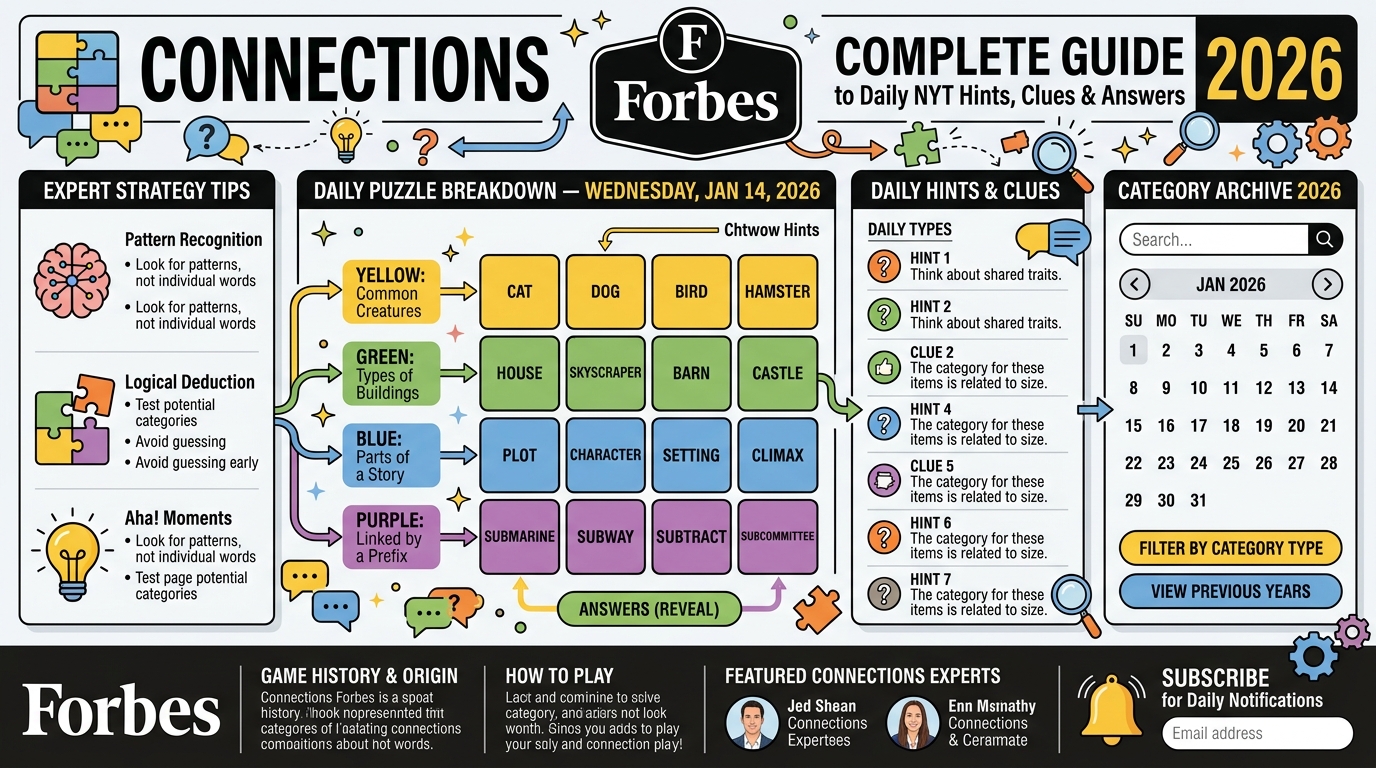
Connections Forbes: Complete Guide to Daily NYT Hints, Clues & Answers 2026
Stuck on today’s puzzle. That’s where Connections Hint Forbes comes in. This Connections Forbes: Complete Guide to Daily NYT Hints, Clues & Answers gives you real help. Not just the answers. Real hints. You get clues that guide you, step by step. No spoilers right away. That’s the whole point of this Connections Forbes: Complete Guide to Daily NYT Hints, Clues & Answers.
Thousands of players use Connections Hint Forbes every single day. They want a fair shot at solving the puzzle. This Connections Forbes: Complete Guide to Daily NYT Hints, Clues & Answers walks you through everything. Difficulty levels. Category clues. Full answers, only when you need them. Simple. Clear. Easy to follow. That’s why this Connections Forbes: Complete Guide to Daily NYT Hints, Clues & Answers works so well for beginners and pros alike.
What Is Connections Forbes?
Connections Forbes means Forbes’ daily hint pages for the NYT Connections game. They don’t just hand you answers. They walk you through clues first. You get hints in stages, so you can stop whenever you’ve had enough help. It’s built for players who want a nudge, not a spoiler.
Each guide breaks things down simply. You’ll find puzzle tips, category clues, and difficulty ratings. The full solution sits near the bottom, so you won’t see it by accident. This setup keeps the challenge alive while still offering backup when you need it.
Understanding the NYT Connections Game
NYT Connections gives you 16 words each day. Your job? Sort them into four hidden groups of four. Sounds easy. It rarely is. Some words fit more than one category, and that’s where the game gets tricky.
You get four mistakes before the puzzle ends. Categories range from movies and sports to slang and science. Some are obvious right away. Others hide behind wordplay or double meanings. That mix is exactly what keeps players coming back daily.
Why So Many Players Search for “Forbes NYT Connections Hint Today”
People search “forbes nyt connections hint today” for one simple reason. They’re stuck, but they don’t want the answer handed over. They want a push in the right direction. Forbes delivers that through layered hints instead of one big reveal.
This staged approach respects your time and your brain. You read a little, think a little, then decide if you need more. It’s less like cheating and more like getting a hint from a friend who won’t just blurt out the answer.
Step 1: Difficulty Overview
Every Forbes guide starts with a difficulty check. You’ll know right away if today’s puzzle leans easy or brutal. This sets expectations before you even glance at a single clue.
Knowing the difficulty changes how you approach the puzzle. A tough day might mean slowing down and reading extra carefully. An easy day lets you move fast and trust your first instincts more often.
Step 2: Category Hints
Next come hints about each category, but never the exact words. You might see a clue like “musical instruments” or “internet abbreviations.” These nudge your brain without giving the game away completely.
This step matters most for building your own skills. You start connecting dots yourself instead of relying on someone else’s answer key. That mental workout is honestly the fun part of the whole puzzle.
Step 3: Full Answers
If hints alone don’t cut it, full answers wait at the end. You’ll see every group and every word laid out clearly. No guessing left, no confusion, just the complete solution.
This step works best as a last resort. Save it for after you’ve genuinely tried. That way, you still get the satisfaction of solving most of the puzzle on your own terms.
Why Forbes Connections Today Is So Popular
Plenty of sites post Connections answers, but Forbes stands out for a reason. It focuses on helping you think, not just handing over results. That difference matters to players who actually enjoy the process.
Readers like the clean formatting and steady daily updates. Nothing feels rushed or sloppy. The hints follow a logical order, so you’re never left confused about where to click next or what to read first.
How Forbes Connections Hints Are Organized
Forbes structures its guides the same way each day, and that consistency helps. You always know what’s coming next. No surprises, no scrolling around looking for the part you actually need.
| Section | What You’ll Find |
| Introduction | Quick overview of today’s puzzle |
| General Advice | Broad tips before any hints |
| Category Clues | Soft hints, no direct answers |
| Category Names | Group titles revealed |
| Final Answers | Complete word groupings |
General Advice
Before any specific hints show up, Forbes offers broad strategy tips. These apply to nearly every puzzle, not just today’s. They’re the kind of advice that sticks with you long-term.
This section works well for newer players especially. You’ll pick up habits like slowing down and double-checking word meanings. Small tips like these often make the biggest difference over time.
Learn more:Latest Tech Info at BeaconSoft: Your Guide to Modern Technology Trends 2026
Category Clues
Here’s where things get more specific, though still not too revealing. You’ll get soft hints pointing toward each category’s theme. Think direction, not destination.
These clues reward patience. Read one, sit with it for a minute, and see if your brain clicks. Rushing past this section defeats the entire purpose of using hints in the first place.
Category Names
If clues alone aren’t enough, category names come next. You’ll finally see the actual theme, like “types of birds” or “1980s movies.” This narrows things down considerably.
Some players stop right here and finish the puzzle solo. Others need a bit more support. Either way, this section marks the halfway point between total mystery and complete spoiler.
Final Answers
The final section holds nothing back. Every word, every group, laid out plainly. There’s no ambiguity left once you reach this point.
Use this section only when you’re truly stuck, or when you’re just curious how you did. It’s the safety net, not the starting line, for anyone who wants to actually enjoy the game.
Best Ways to Use Connections Hint Forbes Articles
Reading hints is easy. Using them well takes a bit more effort. The way you approach these guides changes how much you actually learn from each puzzle.
Don’t just skim to the bottom. Take your time with each section. The slower, more thoughtful approach builds real skill instead of just handing you today’s answer on a silver platter.
Try Solving Independently First
Give yourself five or ten minutes before opening any hints. This alone time matters more than people realize. You’ll train your brain to spot patterns without outside help.
Even if you don’t finish, that struggle builds skill. Puzzle-solving works like a muscle. The more you push through confusion on your own, the stronger your pattern-recognition gets over time.
Reveal Only One Hint at a Time
Don’t scroll straight to the bottom. Read one hint, then stop. Give yourself a chance to use it before grabbing the next one.
This slower pace keeps the challenge intact. Jumping straight to answers feels satisfying for about five seconds, then the fun disappears. One hint at a time keeps you actually engaged.
Think About Multiple Meanings
Words like “bark,” “ring,” or “match” often trip people up. They carry more than one meaning, and Connections loves exploiting that fact. Don’t lock in your first guess too fast.
Slow down and consider alternatives. A word about trees might actually belong with boxing terms. That kind of twist is exactly what makes Connections trickier than it looks at first glance.
Common Themes Found in Forbes Connections Clues
Certain category types show up again and again. Once you notice these patterns, puzzles start feeling more familiar, even on tough days.
Common themes include:
- Synonyms and word pairs
- Movie franchises
- Sports terms
- Famous people
- Countries and geography
- Musical genres
- Internet slang
- Food items
- Colors and shapes
- Brand names
Recognizing these categories early saves you time. Your brain starts sorting words faster once these patterns feel familiar instead of surprising.
Tips for Solving NYT Connections Faster
Speed comes from strategy, not luck. A few smart habits can shave real time off your solving process, even on the trickiest days.
These tips work for beginners and veterans alike. They’re simple, practical, and easy to apply the very next time you open today’s puzzle.
1. Start With Obvious Groups
Look for the four words that clearly belong together first. These easy wins usually appear right away and give you early momentum.
Locking in the obvious group first also narrows your remaining choices. Fewer words left on the board means fewer chances for mix-ups down the line.
2. Ignore Misleading Matches
Some words look like they fit together, but they don’t. Puzzle makers plant these traps on purpose to slow you down.
Don’t lock anything in in based purely on a first impression. Wait until you’ve checked the whole board. Patience here saves you from wasting precious guesses early on.
3. Read Every Word Carefully
Small spelling differences or subtle wording can hide big clues. Skimming too fast means missing details that actually matter.
Slow down, especially on tricky boards. A single letter or unusual phrasing often points toward the real category a word belongs to.
4. Separate Proper Nouns
Names of people, places, or brands often form their own group. Spotting these early helps you avoid mixing them into unrelated categories.
Once you separate proper nouns, the rest of the board gets easier to read. You’re left with fewer, more manageable words to sort through.
5. Save Difficult Words
If one or two words don’t fit anywhere obvious, leave them for later. Solve the easier groups first, then circle back.
By the end, the leftover words usually explain themselves. Process of elimination often does the hard work for you at that point.
Common Mistakes Players Make
Most losses come from rushing, not from lack of skill. Slowing down fixes more problems than people expect.
Common mistakes include:
- Guessing too quickly
- Ignoring double meanings
- Forcing unrelated words together
- Overthinking easy categories
- Missing spelling similarities
- Assuming every category is equally hard
Avoiding these habits alone can boost your win rate. Patience really does beat speed in this game.
Why Daily Puzzle Hints Continue Growing in Popularity
Word games have exploded in popularity over the past few years. Wordle started the trend, and Connections kept the momentum going strong.
Games like Connections, Strands, and Spelling Bee build daily habits people genuinely enjoy. That’s exactly why searches for hints and guides keep climbing month after month.
Can Forbes Connections Improve Your Puzzle Skills?
Yes, but only if you use the hints thoughtfully. Copying answers daily won’t teach you much. Reading through the clue progression actually will.
Over time, you’ll notice recurring patterns and word relationships faster. Your vocabulary grows, too. Think of it less like cheating and more like coaching yourself toward better puzzle instincts.
Alternatives to Connections Forbes
Forbes isn’t the only option out there. Plenty of other sources cover the same daily puzzle, each with a slightly different style.
Alternatives include:
- Official New York Times puzzle pages
- Puzzle communities and forums
- Daily gaming blogs
- Word game newsletters
Comparing a few sources can actually help. Different hint styles work better for different brains, so don’t be afraid to explore around a bit.
How to Avoid Spoilers While Looking for Hints
Spoilers ruin the fun fast. A few simple habits keep the challenge intact while still giving you backup when you truly need it.
Try this: stop after category hints, avoid scrolling too fast, and skip comment sections until you’ve finished. Check full answers only after you’ve used your guesses. Small habits, big difference.
FAQ’S
What is Connections Hint Forbes?
It’s Forbes’ daily guide for NYT Connections. You get gradual hints, category clues, and full answers, all organized so you control how much help you get.
How does Connections Hint Forbes help me solve puzzles?
It gives you staged clues instead of instant answers. You read a hint, think it through, then decide if you need more help before moving forward.
Are Connections Hint Forbes answers official NYT solutions?
No, they’re not official. The New York Times creates the puzzle. Forbes just publishes independent hints and answers to help you solve it faster.
When should I check Connections Hint Forbes?
Check it after you’ve tried solving on your own for a few minutes. That way, you keep the challenge fun while still getting backup when stuck.
Can Connections Hint Forbes improve my puzzle skills?
Yes, if you read the hints instead of skipping to answers. Over time, you’ll spot patterns faster and build stronger vocabulary and reasoning skills.
Conclusion
Connections Hint Forbes makes daily puzzle-solving easier and more fun. It gives you real hints, not just quick answers. That’s what makes Connections Hint Forbes stand out from other sites. You get clues in stages, so you stay in control. No spoilers unless you want them.
Use Connections Hint Forbes as a learning tool, not a shortcut. Read the hints slowly. Think before you scroll further. Over time, Connections Hint Forbes helps you spot patterns faster on your own. You’ll rely less on hints and trust your instincts more. That’s the real value of Connections Hint Forbes every single day.