Have you ever tried to picture 100 feet without a tape measure in hand? Most people struggle with it. Abstract numbers mean very little until you connect them to something real. Whether you are sizing up a construction project, planning a landscaping layout, or simply satisfying your curiosity, knowing what 100 feet actually looks like in the real world makes everything easier.
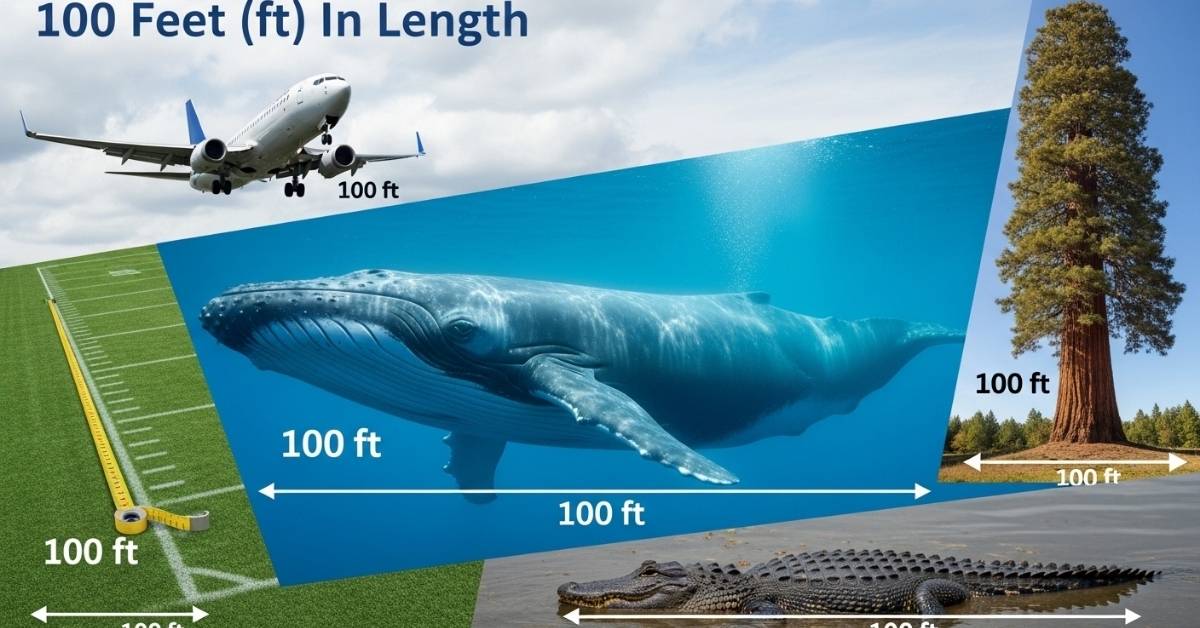
To put it plainly, 100 feet equals 30.48 meters, 1,200 inches, or roughly 33.3 yards. It is about the height of a 10-story building, the length of a mature blue whale, or one-third of an American football field. Once you connect this number to familiar objects, your spatial awareness sharpens considerably.
In this guide, you will find 19 real-world comparisons covering nature, architecture, aviation, sports, and everyday life to help you visualize 100 feet instantly.
What Measures 100 Feet in Length?
| Object / Reference | Approximate Length |
| 10-Story Building | ~100 ft (height) |
| One-Third of a Football Field | 100 ft |
| Two School Buses End to End | ~96–100 ft |
| Large Oak Tree | 80–120 ft |
| Blue Whale | ~80–100 ft |
| Boeing 737-500 | ~101 ft 9 in |
| 20x Blue Whale Hearts | 100 ft |
| 10 Alligators End to Tail | ~100 ft |
| 10 Kayaks End to End | ~100 ft |
| Eastern Cottonwood Tree | ~80–100 ft |
| Small Rope Bridge / Zipline | ~100 ft |
| NHL Hockey Rink Width | ~85–100 ft |
| Basketball Court (NBA) | ~94 ft (length) |
| 10 Stacked Basketball Hoops | 100 ft |
| Twice the Hollywood Sign | ~88–100 ft |
| 2/3 of Olympic Swimming Pool | ~100 ft |
| Two Semi-Trailers End to End | ~96–106 ft |
| 1.5 Cricket Pitches | ~99 ft |
| 1 and 1/3 of a Bowling Lane | ~100 ft |
1. A 10-Story Building

When people ask “what does 100 feet look like?”, a 10-story building is the most immediate answer. Standard commercial construction allocates roughly 10 feet per floor, including the floor slab and ceiling. That means a typical 10-story office tower or apartment building rises to approximately 100 feet from the ground to the roofline.
Next time you are standing on a city sidewalk, look up at the nearest mid-rise building and count the floors. If it has 10 stories, you are looking at 100 feet of height. This comparison works globally because construction standards for floor-to-floor height are fairly consistent across modern buildings.
Read More: How Long is 20 Feet?
2. One-Third of a Football Field

An American football field measures 300 feet from goal line to goal line, not counting the end zones. Divide that into three equal parts and each segment is exactly 100 feet, or roughly 33 yards. Picture standing at one goal line and walking toward the opposite end. When you hit approximately the 33-yard marker, you have covered 100 feet.
This is one of the most reliable visual references because football fields are standardized and millions of people have watched games from the stands or on television. The yard markers make the distance easy to mentally mark off.
3. Two School Buses Parked End to End

A standard full-size school bus measures around 40 feet in length. Two of those parked bumper to bumper give you approximately 80 feet, and a third of a bus added on top brings you right to the 100-foot mark. For practical purposes, imagining two and a half school buses in a row gives an excellent horizontal sense of 100 feet.
School buses are everywhere, making this one of the most accessible and universally understood references for length estimation. Their bright yellow color and uniform size make them perfect mental yardsticks.
4. A Large Oak Tree

Mature oak trees are among the most impressive natural markers for height. A fully grown red oak or white oak commonly reaches between 80 and 120 feet tall, with many specimens landing right around the 100-foot mark. These century-old trees develop slowly over decades, eventually towering over the surrounding landscape.
Key Oak Tree Facts
- Average mature height: 60 to 120 feet
- Species closest to 100 feet: Red Oak, White Oak, Bur Oak
- Growth rate: approximately 1 to 2 feet per year
- Lifespan: 200 to 500 years in ideal conditions
The next time you stand beneath a grand old oak and look up at the canopy, you may well be gazing at a living, breathing 100-foot scale marker.
Read More: How Big Is 2mm? 9 Most Common Things That Are 2mm In Size
5. A Blue Whale
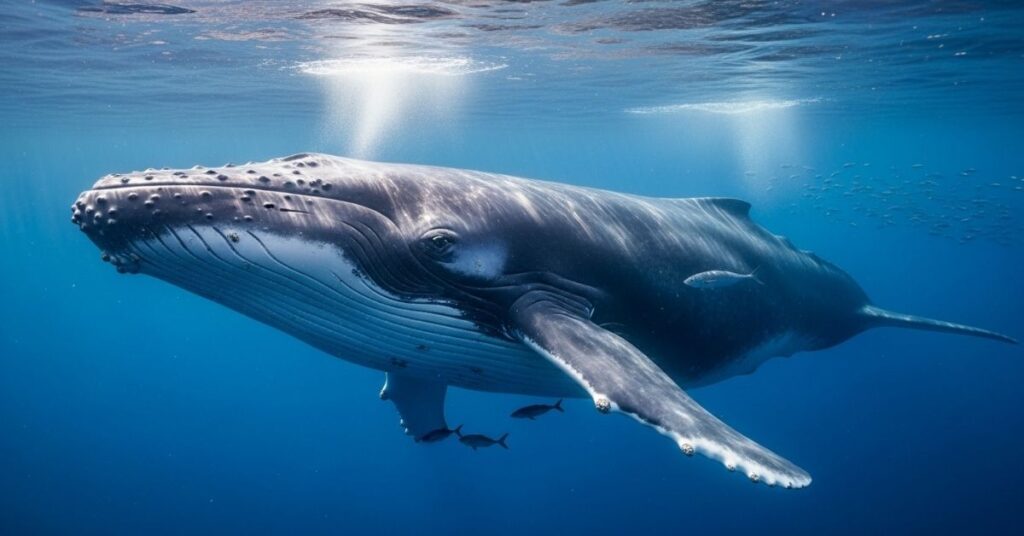
The blue whale holds the title of the largest animal ever to have existed on Earth. Adult blue whales range from 80 to 100 feet in length, with some females reaching slightly beyond 100 feet. A whale at the upper end of this range weighs approximately 150 to 200 tons.
To put the scale in perspective, a blue whale stretched out is roughly equivalent to the length of an NBA basketball court. Life-size replicas displayed in natural history museums give visitors a powerful, visceral understanding of just how vast 100 feet truly is when you are standing next to it.
6. The Boeing 737-500
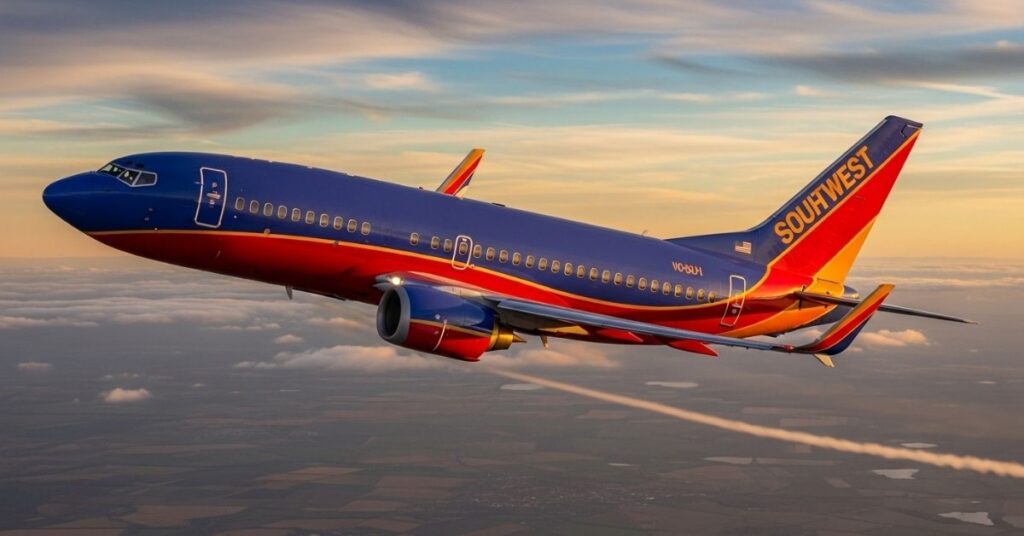
Aviation provides one of the most surprising 100-foot references. The Boeing 737-500, a member of the 737 Classic family and one of the shorter variants in Boeing’s bestselling narrow-body lineup, measures approximately 101 feet 9 inches (31.01 meters) in length. This makes it nearly a perfect match for 100 feet.
When you see a 737-500 parked at an airport gate, the open tarmac around it can make the aircraft look smaller than it really is. But walk from the nose to the tail and the distance becomes immediately apparent. This aircraft carried up to 132 passengers on short and medium-haul routes, proving that 100 feet can hold a remarkable amount of useful space.
7. 20x The Heart of a Blue Whale

Here is a fascinating biological comparison. A blue whale’s heart is one of the largest organs in the animal kingdom, weighing around 400 pounds and measuring approximately 5 feet in size. Lay 20 of those hearts end to end and you have 100 feet.
This comparison might sound unusual, but it is a vivid way to grasp both the scale of 100 feet and the extraordinary biology of the blue whale. Each heartbeat pumps around 60 gallons of blood through the whale’s 100-foot body, a rhythm so slow it beats only about 8 to 10 times per minute.
8. Alligators
American alligators are among the largest reptiles in North America. A fully grown adult male typically measures between 10 and 14 feet from snout to tail tip, with 10 feet being a solid average for the species. Line up 10 alligators head to tail and you have covered 100 feet.
American Alligator Quick Facts
- Average adult length: 10 to 14 feet
- Number needed to reach 100 feet: approximately 10
- Habitat: swamps, rivers, and coastal marshes of the southeastern United States
- Status: recovered species, no longer endangered
This comparison creates a memorable mental image and connects a well-known animal to a surprisingly useful measurement reference.
9. 10x Kayaks
A standard recreational kayak measures between 8 and 12 feet in length, with 10 feet being the most common size for single-paddler recreational models. Arrange 10 of these kayaks nose to tail on a beach or riverbank and you have a 100-foot line.
Kayaks are popular and widely recognizable, making this a practical reference for outdoor enthusiasts and water sports fans. The next time you are at a rental dock or paddling launch point, look at 10 kayaks laid out and you will have a clear, tangible sense of 100 feet in action.
10. The Eastern Cottonwood Tree
The Eastern Cottonwood is one of the fastest-growing trees in North America, capable of adding 6 feet of height per year under ideal conditions. Mature specimens commonly reach between 80 and 100 feet tall, with some exceptional trees exceeding that range.
These trees thrive along riverbanks, floodplains, and open fields across the central and eastern United States. Their tall, straight trunks and distinctive rustling leaves make them a standout feature in any landscape. A fully grown Eastern Cottonwood is essentially a living 100-foot landmark.
11. A Small Rope Bridge or Zipline
Many adventure parks, nature trails, and recreational facilities feature rope bridges and ziplines in the 80 to 120-foot range. A modest rope bridge or zipline course spanning approximately 100 feet is common in both commercial adventure parks and rural settings.
This comparison is useful because it gives a horizontal sense of 100 feet at ground level. If you have ever walked across a swaying rope bridge in a forest or nature park, you may have crossed a structure very close to 100 feet in length, giving you a direct physical experience of this distance.
12. A Hockey Rink Width
An NHL regulation hockey rink measures 200 feet in length and 85 feet in width. An Olympic-sized rink is wider at 98 to 100 feet across. The width of an Olympic hockey rink is therefore extremely close to 100 feet, making it a useful sports-based reference for horizontal distance.
Hockey Rink Dimensions at a Glance
| Rink Type | Length | Width |
| NHL Regulation | 200 ft | 85 ft |
| Olympic / International | 197 ft | 98–100 ft |
| Backyard / Recreational | Varies | Varies |
If you have ever watched an Olympic hockey game and thought the rink looked wider than what you see in the NHL, that extra width is what brings it close to 100 feet.
13. A Basketball Court
A regulation NBA basketball court measures 94 feet in length and 50 feet in width. That puts the court just 6 feet short of the 100-foot mark. For practical estimation purposes, a full-length basketball court is one of the closest sports-surface references to 100 feet.
Players who have spent thousands of hours practicing on regulation courts develop an instinctive understanding of 94 feet. Add a little more than a car length to that mental image and you have reached 100 feet. The familiarity of a basketball court makes it one of the most intuitive reference points in this entire list.
14. 10 Basketball Hoops
A standard basketball hoop sits exactly 10 feet above the floor, as specified by both NBA and NCAA regulations. Stack 10 of those hoops one on top of another and you have a perfect 100-foot tower. This is a neat mathematical comparison that works well for people familiar with the sport.
When a player launches a shot from the free-throw line and watches it arc toward a 10-foot rim, they are covering one-tenth of 100 feet in vertical height every time the ball reaches the basket. That frame of reference can turn a standard sports measurement into a genuine understanding of larger-scale distances.
15. Twice The Hollywood Sign
The famous Hollywood Sign in Los Angeles has individual letters that stand 45 feet tall and approximately 31 to 35 feet wide. The entire sign stretches about 350 feet horizontally across the hillside. When people refer to the sign itself as a length reference, the height of its letters at 45 feet means two of those letter heights stacked would bring you close to 100 feet.
More usefully, about 28 to 30 feet of the sign’s horizontal span represents 100 feet when scaled proportionally. The Hollywood Sign is a globally recognized landmark, making it a memorable pop-culture anchor for understanding scale and distance.
16. 2/3 of Olympic Swimming Pool
An Olympic swimming pool is exactly 50 meters long, which converts to approximately 164 feet. Two-thirds of that length works out to just over 100 feet. Imagine watching competitive swimmers complete their laps; the moment they pass the two-thirds point on their journey from one end to the other, they have covered roughly 100 feet.
Competitive swimmers and coaches who work in Olympic pools every day develop a strong intuitive feel for distance. For everyone else, watching a race and mentally marking the two-thirds point offers a vivid sense of just how far 100 feet stretches horizontally.
17. Two Semi-Trailers
A standard semi-trailer used on American highways measures between 48 and 53 feet in length per the U.S. Department of Transportation regulations. Two trailers parked end to end, without the cab, give you between 96 and 106 feet. That range straddles 100 feet almost exactly.
Truck drivers and logistics professionals who work with these vehicles every day have an ingrained understanding of their scale. For highway travelers, a pair of semi-trailers parked side by side at a rest stop offers an easy and immediately available reference for this distance.
18. 1.5 Cricket Pitches
A regulation cricket pitch, as defined by the Marylebone Cricket Club and the International Cricket Council, measures 66 feet from one bowling crease to the other. One and a half pitches placed end to end gives you 99 feet, which is as close to 100 feet as any sports surface measurement gets.
Cricket is played in over 100 countries worldwide, making this a highly accessible international reference. If you have ever watched a Test match and observed the bowler running in from the boundary to the crease, you have a clear visual sense of that 66-foot pitch. Add half of that distance again and you are at 100 feet.
19. 1 and 1/3 of a Bowling Lane
A regulation bowling lane measures 60 feet from the foul line to the center of the headpin. Including the 15-foot approach area behind the foul line, the total playing surface from the back of the approach to the pins runs approximately 75 feet. One full lane plus an additional third of a lane brings you to exactly 100 feet.
Bowling is one of the most popular recreational sports in the United States, with thousands of alleys across the country. Anyone who has rolled a ball down a lane and watched it travel toward the pins has experienced 60 feet of distance firsthand. Extending that mental image by a third gives a clear sense of 100 feet in a familiar setting.
How Long is 100 Feet to Walk?
An average adult walks at a pace of roughly 2.5 to 3.5 miles per hour. At a comfortable, moderate walking pace, 100 feet takes approximately 20 to 30 seconds to cover. In terms of steps, most adults take between 35 and 45 steps to walk 100 feet, depending on stride length.
For a quick field estimate, count your steps. If your stride is about 2.5 feet long, 40 steps gets you to 100 feet with great accuracy. This makes pacing a surprisingly effective tool for measuring distances in the field when no measuring device is available.
Why Use the Foot?
The foot remains one of the most widely used units of measurement in the United States, the United Kingdom (for some applications), and several other countries where the imperial system remains in common use. There are several practical reasons it has persisted:
- Human-scaled reference. A foot is close to the length of a human foot, making it intuitive for everyday estimation.
- Construction and real estate. Blueprints, floor plans, and property dimensions in the U.S. are almost universally expressed in feet and inches.
- Aviation and altitude. Aircraft altitude is measured in feet by international convention, even in countries that use the metric system for most other purposes.
- Sports. American football, basketball, and baseball all use feet as their standard unit for field and court dimensions.
- Safety codes. Building codes, fire codes, and electrical codes in the U.S. specify clearance and setback distances in feet.
Understanding feet as a unit, and anchoring them to real-world references like the ones in this article, makes it much easier to navigate these practical applications in everyday life.
FAQ’s
How many meters is 100 feet?
100 feet equals exactly 30.48 meters.
How many steps does it take to walk 100 feet?
For an average adult, it takes approximately 35 to 45 steps to walk 100 feet.
Is 100 feet the same as 100 yards?
No. 100 yards equals 300 feet, so 100 feet is only one-third of 100 yards.
How tall is a 10-story building in feet?
A standard 10-story building is approximately 100 feet tall, based on a typical floor height of 10 feet.
How big is 100 feet compared to a football field?
100 feet is exactly one-third the length of an American football field measured from goal line to goal line.
How many inches are in 100 feet?
100 feet equals 1,200 inches.
What is the easiest way to visualize 100 feet?
The easiest references are a 10-story building (vertical) or one-third of a football field (horizontal), as both are widely seen and standardized.
Can a blue whale really be 100 feet long?
Yes. Adult blue whales commonly reach 80 to 100 feet in length, making them the largest animals on Earth and one of nature’s most dramatic 100-foot references.
Conclusion
Understanding how big 100 feet really is becomes far easier when you anchor it to familiar objects and structures. From the soaring height of a 10-story building and the breathtaking length of a blue whale, to the everyday scale of a basketball court and two semi-trailers, this measurement appears across architecture, nature, sports, and transportation in ways most people never notice.
The next time someone mentions 100 feet in conversation, you will not need a ruler. Picture a football field and walk one-third of the way toward the opposite end. Imagine standing at the nose of a Boeing 737-500 and walking to its tail. Look up at a 10-story building from the sidewalk below. Any of these vivid mental images will give you an immediate, accurate sense of this impressive distance.
Whether you are planning a construction project, estimating property boundaries, or simply feeding your curiosity about the world’s measurements, these 19 real-world comparisons make 100 feet a number you will never forget.