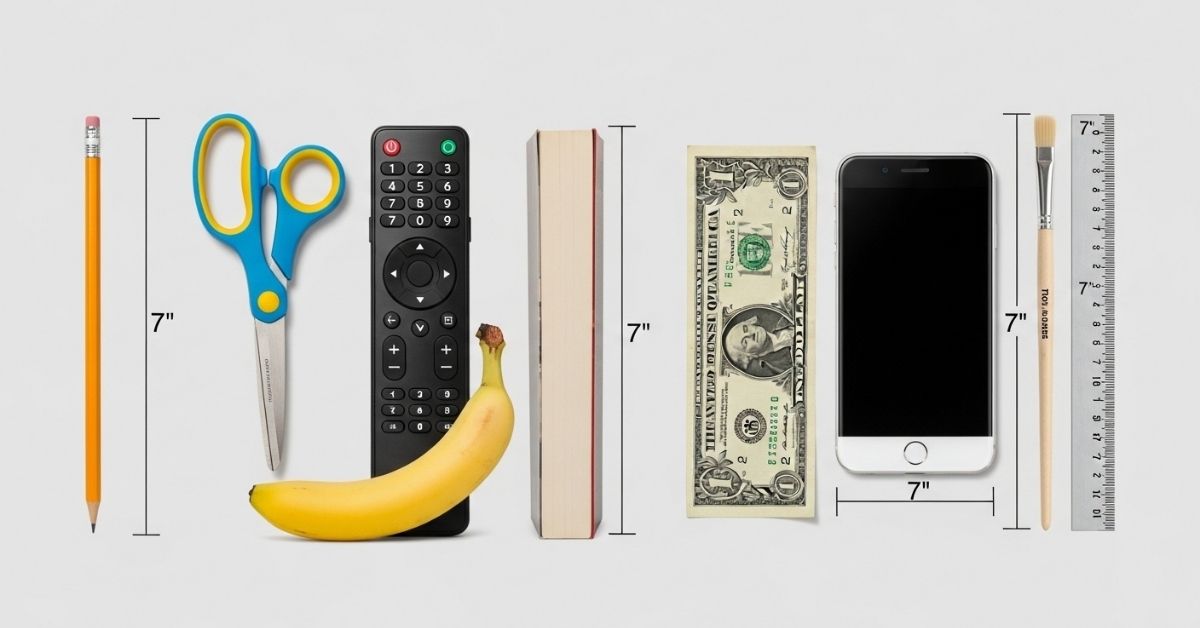
You’ve probably heard “7 inches” tossed around in conversation. Maybe you’re trying to picture a phone screen size. Or maybe you’re measuring something at home without a ruler nearby. Either way, visualizing 7 inches isn’t as tricky as it sounds once you know what to compare it to.
Seven inches sits just past the halfway mark of a foot. In centimeters, that’s roughly 17.78 cm. It’s not tiny. It’s not huge. It sits right in that sweet spot of medium, useful, and surprisingly common. Once you start noticing it, you’ll see this length everywhere.
Let’s walk through 14 real, everyday objects that measure right around 7 inches long, and why that actually matters more than you’d think.
| Object | Approximate Length | Common Use |
| iPad 10th Gen (width) | 7.07 inches | Tablets, reading, sketching |
| Standard Pencil | 7.5 inches | Writing, drawing |
| Toothbrush | 7 inches | Daily oral hygiene |
| Small Garden Trowel | 7 inches | Gardening, planting |
| Medium Banana | 7 inches | Snacking, visual reference |
| Two Stacked Credit Cards | 6.8 inches | Quick measuring hack |
| Seven US Quarters (stacked) | 7 inches | DIY measurement |
| Butter Knife | 7 inches | Spreading, light cutting |
| Office Scissors | 7 inches | Crafting, paper cutting |
| Small Salad Plate | 7 inches (diameter) | Portion control, dining |
| Four Golf Balls (stacked) | 6.72 inches | Sports reference |
| Half a Bowling Pin | 7.48 inches | Visual sports reference |
| iPhone 16 Pro Max | 6.42 inches | Smartphone |
| Samsung Galaxy S25 Ultra | 6.41 inches | Smartphone |
Gadgets and Personal Devices Around 7 Inches
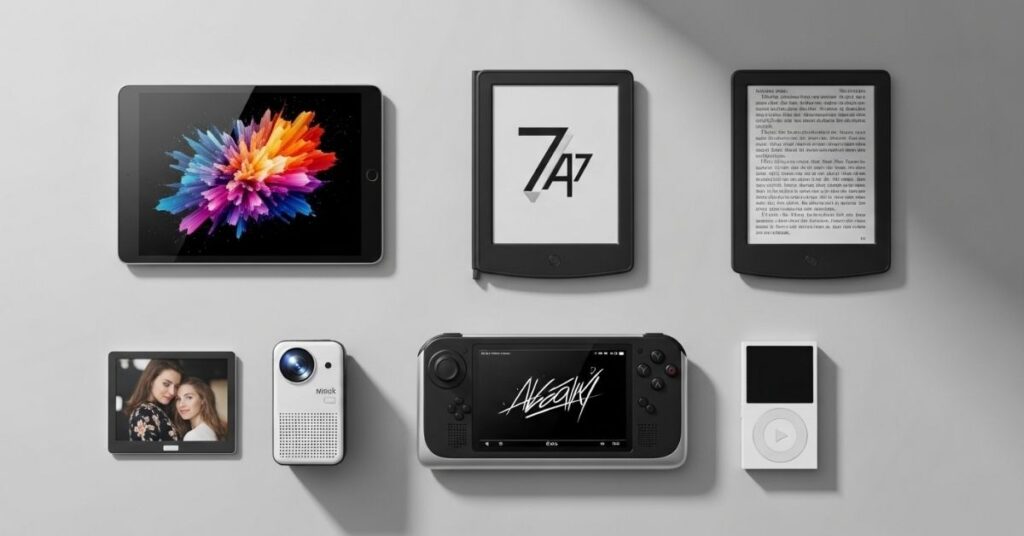
Here’s something worth knowing. Your smartphone is probably sitting within an inch of the 7-inch mark right now. The iPhone 16 Pro Max clocks in at 6.42 inches. The Samsung Galaxy S25 Ultra hits 6.41 inches. Close, but not quite there.
Then there’s the iPad 10th Generation. Its width measures 7.07 inches, which is essentially a textbook example of how big is 7 inches in real life. Pick one up and you instantly feel that medium, palm-friendly size.
Smartphone cases, tablet sleeves, and tech accessories are often built with this general length in mind. It’s no coincidence. Ergonomics and user comfort quietly push designers toward this size range again and again.
Read More: 15 Common Things that are 7 Inches Long
Everyday Writing and Sketching Tools
Grab a pencil from your desk. A standard unsharpened pencil runs about 7.5 inches long. That’s close enough to give you a reliable visual anchor whenever you need one.
Office scissors? Most standard pairs land right around 7 inches. Comfortable for adults, easy to control, and sized to fit naturally in your hand. Butter knives follow the same pattern, hovering near 7 inches and doubling as a surprisingly handy measuring reference in a pinch.
Here are some writing and sketching tools that hover near the 7-inch mark:
- Standard pencil (7.5 inches)
- Office scissors (about 7 inches)
- Butter knife (approximately 7 inches)
- Medium paintbrush handle (close to 7 inches)
- Ballpoint pen with cap (varies but often near 6.5 to 7 inches)
These aren’t random. Tools designed for hand use tend to cluster around lengths that feel natural to grip and control.
Kitchen and Dining Items Close to 7 Inches
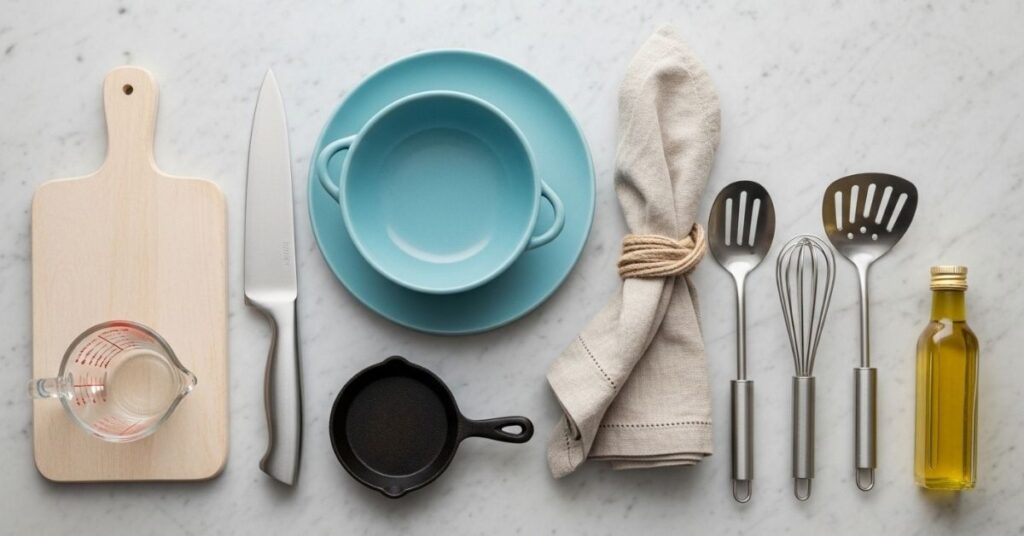
Your kitchen is quietly packed with 7-inch references. Small salad plates typically measure 7 inches in diameter. They’re designed for individual servings, and that size isn’t accidental. It fits a human hand comfortably and keeps portions visually controlled.
A medium banana, peeled and laid flat, lands right around 7 inches. It sounds funny, but it works beautifully as a teaching tool, especially with kids learning about real life measurement examples without a ruler in sight.
Small garden trowels also hit this mark. Many measure close to 7 inches in blade length, making them easy to grip and control during planting. Stack two credit cards with a slight overlap and you’re sitting at roughly 6.8 inches. Near enough for quick approximate measurements when nothing else is nearby.
Sports and Recreation Objects
Sports gear offers some surprisingly satisfying 7-inch comparisons. Line up four golf balls end to end and you reach about 6.72 inches. That’s just a hair under 7, but close enough to serve as a practical size comparison reference.
Half a bowling pin measures about 7.48 inches, or roughly 19 cm. It’s a fun fact that sticks, especially if you’re someone who learns better through tactile, physical examples rather than abstract numbers.
These comparisons work because they’re tangible. You’ve held a golf ball. You’ve seen a bowling pin. Connecting those familiar objects to a specific measurement makes the number feel real instead of abstract.
Household and Office Essentials
Look around your home right now. Chances are you’re surrounded by objects that answer the question of how big is 7 inches without you even realizing it.
- A standard toothbrush sits at roughly 7 inches, handle and head included
- Stack seven US quarters and you hit almost exactly 7 inches
- Compact rulers sometimes cap out at 7 inches
- Most butter knives rest right at this length
These objects pop up in every room of the house. They’re familiar. They’re comfortable. And they double as instant measuring tools when you need a quick reference without digging through a toolbox.
Body-Based Measurement References
Long before rulers existed, humans measured with their hands. That tradition actually holds up surprisingly well for the 7-inch range.
In many adults, the distance from the base of the palm to the tip of the middle finger spans roughly 7 inches. It varies person to person, but it’s worth checking your own hand. You might already carry a built-in ruler everywhere you go.
The thumb width trick works too. Seven thumb-widths laid side by side get you close to 7 inches, depending on hand size. These human body measurement references have guided builders, tailors, and cooks for centuries. They’re less precise than a ruler, but they’re always with you.
Creative Everyday Uses of 7 Inches
Once you start noticing this length, you find it everywhere. Here are some creative, practical ways people use 7-inch objects as measuring tools in daily life:
- Using a pencil as a scale reference when sketching furniture layouts
- Aligning a banana beside a package to estimate dimensions before shipping
- Stacking coins to measure gap widths during home repairs
- Using scissors length to eyeball spacing when hanging wall frames
- Comparing a toothbrush to small items when precise measurement isn’t critical
None of these replace a proper ruler. But they’re genuinely useful when you’re in a hurry or nowhere near your toolbox. Practical measurement examples don’t always require professional tools.
Cultural Tidbits: Measurements Across the World
Different cultures lean on different everyday objects to explain length. In Japan, compact apartment living has made hand-span measurement second nature for many people. European bakers often reference 17 to 18 cm when describing the ideal pastry length, which maps almost perfectly to 7 inches.
In American classrooms, teachers sometimes use stacked quarters or pencils to make inches to centimeters examples feel concrete rather than abstract. A parent at a kitchenware fair once mentioned using bananas and butter knives to teach her daughter measurement basics. The lesson stuck far better than worksheets ever did.
Measurement isn’t just math. It’s cultural, tactile, and deeply personal.
DIY Projects and Home Hacks
No ruler? No problem. Here are some reliable DIY measuring hacks using common objects near the 7-inch mark:
- Two credit cards laid end to end with slight overlap equals roughly 6.8 inches
- Seven stacked US quarters reach almost exactly 7 inches
- A standard toothbrush plus a paper clip gets you close to 7.5 inches
- Four golf balls lined up measures about 6.72 inches
- One unsharpened pencil gives you 7.5 inches of reliable reference
These tricks won’t replace a tape measure for serious work. But for quick checks, furniture spacing, or craft projects, they’re surprisingly accurate and always within reach.
Fun With Unit Conversions
Seven inches equals 17.78 cm. Half a foot. 0.583 of a foot if you want to get specific about it.
Here’s a quick conversion reference:
| Inches | Centimeters | Feet |
| 7 inches | 17.78 cm | 0.58 ft |
| 7.5 inches | 19.05 cm | 0.625 ft |
| 6.5 inches | 16.51 cm | 0.54 ft |
These numbers matter more than they seem. Knowing that 7 inches is roughly 18 cm helps when shopping internationally, reading product dimensions online, or explaining sizes to someone who grew up using the metric system. It bridges that small but frustrating gap between measurement systems without needing a conversion app.
Frequently Asked Questions
What does 7 inches look like in real life?
It looks like a standard pencil, a medium banana, or the width of an iPad. Picture something that fits comfortably in one hand without hanging over the edges.
Is 7 inches considered a long measurement?
Not really. It sits in the medium range, roughly half a foot. It’s practical, portable, and shows up in tools and gadgets designed for everyday hand use.
How can I measure 7 inches without a ruler?
Stack seven US quarters, use a standard pencil, or lay two credit cards end to end with slight overlap. Each gives you a reliable approximation close to 7 inches.
What is 7 inches in centimeters?
Seven inches equals approximately 17.78 cm. It’s a useful conversion to remember when reading product dimensions from international brands.
What everyday items are exactly 7 inches long?
A toothbrush, a butter knife, a small garden trowel, and a small salad plate diameter all sit right around 7 inches. Any of these work as a quick visual reference at home.
Wrapping Up
So, how big is 7 inches really? It’s a butter knife on your breakfast table. It’s the pencil behind your ear. It’s the toothbrush you picked up this morning without thinking twice. This length is everywhere, woven quietly into the tools, gadgets, and everyday objects you already use.
Once you connect the number to something physical, it stops feeling abstract. You stop needing a ruler for every small measurement. You start trusting your eye, your hand, and the objects already within reach.
That’s the real value here. Not just a list of objects, but a new way of seeing the world around you, one inch at a time.